Navigators and their role alongside Support Coordinators
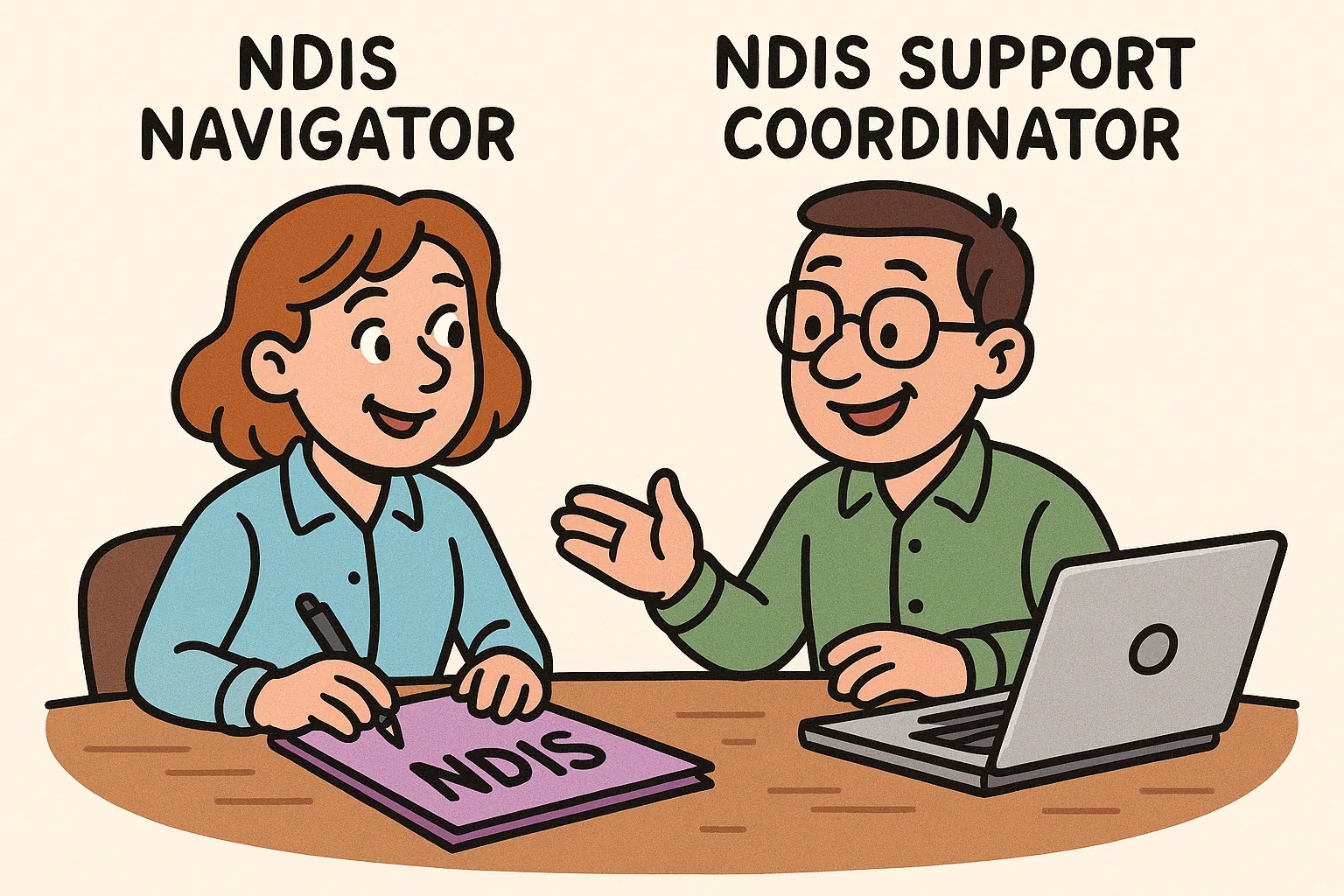
The concept of "navigators" is part of the broader suite of supports available under the NDIS. While specific details regarding navigators may evolve over time, current information from government sources indicates that navigators are intended to assist participants in understanding and accessing NDIS services effectively.
Key Roles of Navigators:
1. Providing Information and Assistance:
- Navigators help participants understand the NDIS process and what supports they can access.
- They provide information about how to apply for the NDIS, what types of supports are available, and how the scheme works.
2. Assisting with Application Processes:
- Navigators assist participants in completing their application forms accurately and comprehensively.
- They help ensure that all necessary documentation is provided to support the participant's eligibility assessment.
3. Connecting Participants with Services:
- Navigators link participants to appropriate services, supports, and providers within their local area.
- This role can be particularly beneficial for participants who are transitioning from other systems (e.g., state-based disability services) or those who need help navigating the complexities of the NDIS.
How Navigators Work with Support Coordinators:
- Collaboration for Participant Needs: Both navigators and support coordinators work to ensure that participants receive the appropriate supports they require. While navigators focus on helping participants understand and access the system, support coordinators provide more hands-on assistance in managing complex needs.
- Transitioning from Navigators to Support Coordinators:
- If a participant requires ongoing management of their supports due to high or complex needs, they may transition from receiving navigation services to being supported by a dedicated support coordinator. This process ensures that participants receive the most appropriate level of assistance based on their individual circumstances.
- Capacity Building: Both navigators and support coordinators aim to build capacity in participants so they can gradually manage their own supports independently. The role of the navigator may be more focused on initial orientation, while a support coordinator provides ongoing management for those with high or complex needs.
Official NDIS Resources:
For detailed information about the roles of navigators and how they interact with support coordinators, refer to the official NDIS website and relevant policy documents. Key resources include:
- NDIS Navigator Fact Sheet (https://www2.education.vic.gov.au/pal/ndis-navigators/resources)
- Support Coordinator Guide for Participants (https://www.ndis.gov.au/participants/using-your-plan/who-can-help-start-your-plan/support-coordination)
These documents provide comprehensive guidance on the roles, responsibilities, and interactions between navigators, support coordinators, and participants within the NDIS framework.
Conclusion:
Navigators play a crucial role in providing initial assistance to participants who are new to the NDIS or require help understanding how the system works. They work alongside support coordinators for those with high or complex needs, ensuring that participants receive the appropriate level of assistance throughout their journey with the NDIS. For more detailed and up-to-date information, always refer to official government sources such as the NDIA’s website.