NDIS Support Coordination (Level 2): what you’re actually paying for (and how to tell if it’s working)
What to expect from your NDIS support coordinator!
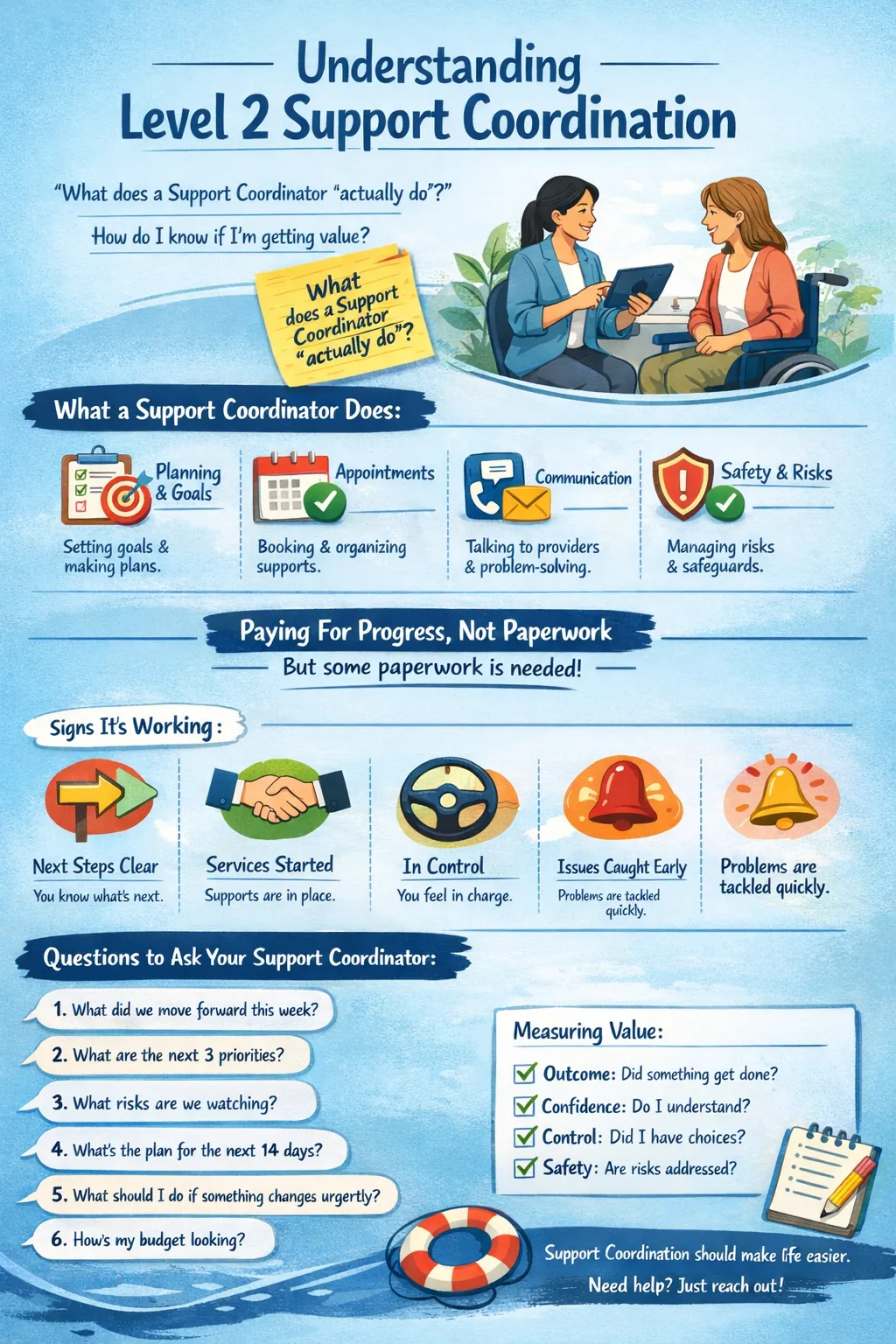
If you’re using **Support Coordination Level 2**, it’s normal to wonder:
- “What does a Support Coordinator *actually do*?”
- “What counts as billable time?”
- “How do I know if I’m getting value?”
This guide is a plain-English way to understand what Level 2 Support Coordination is for, what good looks like, and how to stay in control of your plan.
What Support Coordination Level 2 is (in practical terms)
Support Coordination is the work of helping you use your plan safely and effectively
That usually includes:
- understanding your goals and what matters to you
- turning your plan into a real-world set of actions (appointments, referrals, providers)
- helping you compare providers and make informed choices
- coordinating with services so you don’t have to repeat yourself
- keeping an eye on risks and safeguards
- checking in, adjusting, and helping you prepare for reviews
You’re not paying for paperwork for paperwork’s sake — you’re paying for **progress + reduced stress + fewer mistakes**.
What Level 2 Support Coordination often includes
1) Implementation work
- booking appointments
- sending referrals and following them up
- helping providers understand what you need
- coordinating schedules, meetings, and next steps
2) Communication and coordination
- phone calls and emails with providers
- case conferencing and team meetings
- liaising with plan managers and other stakeholders
3) Planning and review support
- updating goals and plans as your life changes
- preparing for plan reviews and supporting evidence
- tracking what’s working and what isn’t
4) Risk and safeguards
- identifying vulnerabilities and risks early
- creating practical safety steps and emergency readiness where needed
- making sure the team understands key risks and supports
## What good Support Coordination looks like
Here are signs it’s working:
- you have a clear **next step** (not just a long list of ideas)
- your services are actually **starting** (not stuck in phone-tag)
- your preferences are respected and you feel **in control**
- your plan budget is used intentionally and you understand what’s happening
- problems are addressed early (not left until they become crises)
A good Support Coordinator should be able to explain:
- what they did
- why it mattered
- what the result was
- what happens next
What you can ask your Support Coordinator (without awkwardness)
If you’re unsure where time is going, you can ask:
1) “What did we move forward this week?”
2) “What are the next 3 priorities?”
3) “What are the risks we’re watching?”
4) “What’s the plan for the next 14 days?”
5) “What should I do if something changes urgently?”
6) “How much budget do I have left and what can we achieve with it?”
These questions keep you in the driver’s seat
A simple way to measure value
Try this monthly check:
- **Outcome:** Did something important get done?
- **Confidence:** Do I understand what’s happening?
- **Control:** Did I have genuine choice?
- **Safety:** Are risks addressed?
If two or more are consistently “no”, it’s time to adjust the approach.
## Final note
Support Coordination should make your life easier — not add more admin.
If you want help understanding your options, or you’re not sure what to do next, reach out to us.