Role of an NDIS Support Coordinator is more then doing what a participant wants
Participants can achieve more with NDIS
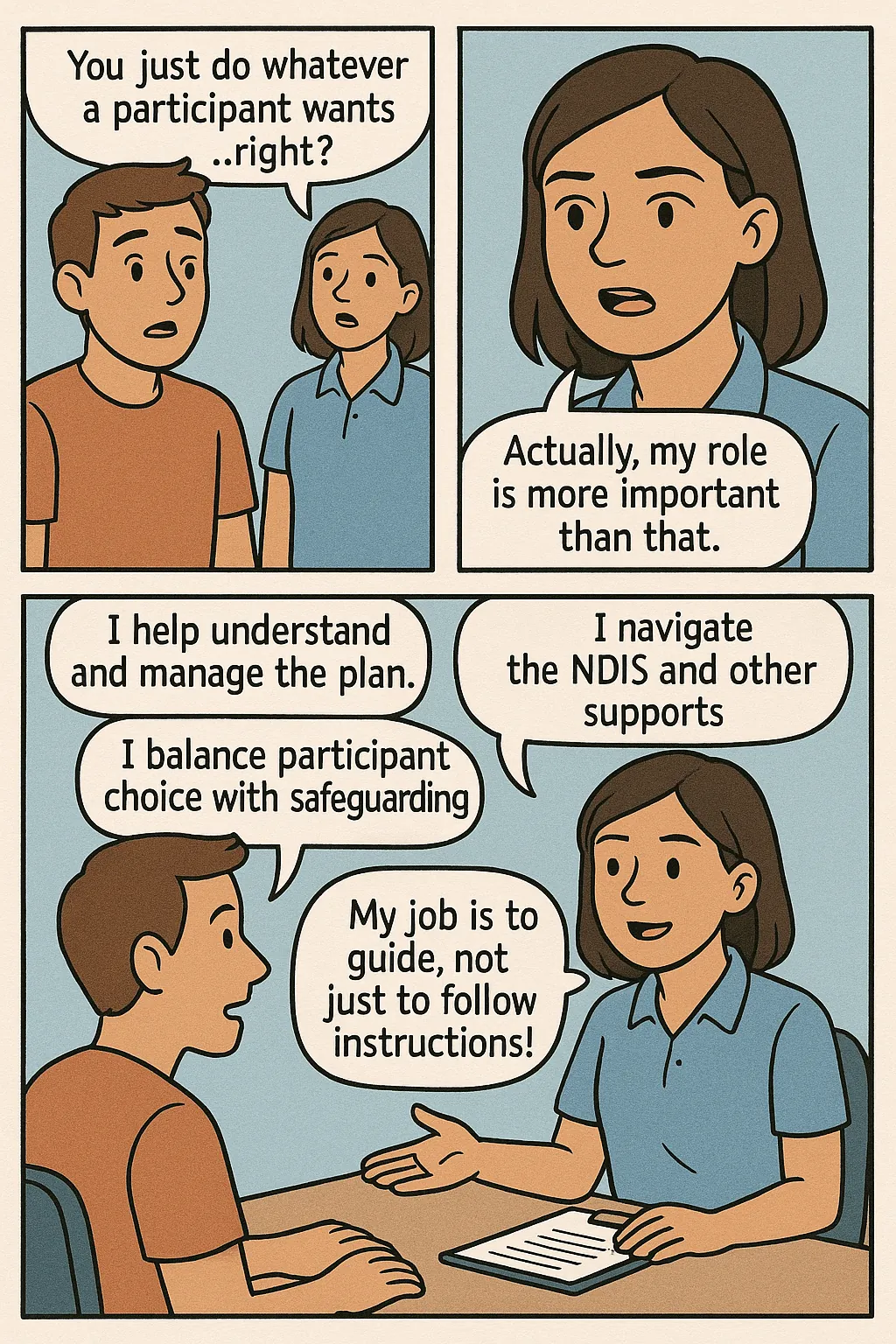
An NDIS Support Coordinator does not simply “do whatever a participant wants.” Their role is more structured and carries professional responsibility, balancing participant choice with compliance, safeguards, and system navigation. Let me break it down clearly:
1. Participant Choice and Control
- The NDIS Act and NDIS Practice Standards make it clear that participants have the right to choice and control over their supports.
- A Support Coordinator must respect the participant’s preferences, culture, values, and goals.
- This means they should explore and present options, help weigh risks and benefits, and work collaboratively with the participant.
Example: If a participant says they want a particular provider, the Support Coordinator should help them connect—but also ensure the provider is registered (if required), safe, and appropriate.
2. The Coordinator’s Professional Role
Support Coordinators are not passive administrators. Their role includes:
- Building capacity: helping participants understand and manage their plan.
- Navigating the NDIS system: linking to mainstream and community supports, not just “signing off” on any request.
- Risk and safeguarding: identifying when a participant’s request could expose them to harm, exploitation, or breaches of the NDIS Code of Conduct.
- Compliance and accountability: ensuring supports align with plan goals, reasonable and necessary criteria, and NDIS guidelines.
Example: If a participant requests funding to be used for something clearly outside the scope of the plan (e.g., gambling, alcohol), the Support Coordinator must say no and guide them to what is fundable instead.
3. Balancing Act
The Support Coordinator role is more important than just following instructions because:
- They act as a navigator and advisor, not just an executor.
- They have a duty of care to both the participant and the NDIS system.
- They must often balance immediate participant wishes with long-term outcomes, plan sustainability, and safeguarding.
In summary:
An NDIS Support Coordinator empowers participants with choice and control, but they are not required (or allowed) to blindly follow requests. Their role is to guide, educate, safeguard, and build capacity, ensuring that participant choices are informed, reasonable, and aligned with NDIS requirements.