Specialist Disability Accommodation Eligibility and Housing Options
Understand how SDAs funding works under the NDIS. Learn about eligibility rules and specialist home designs. Read our guide to check your options.
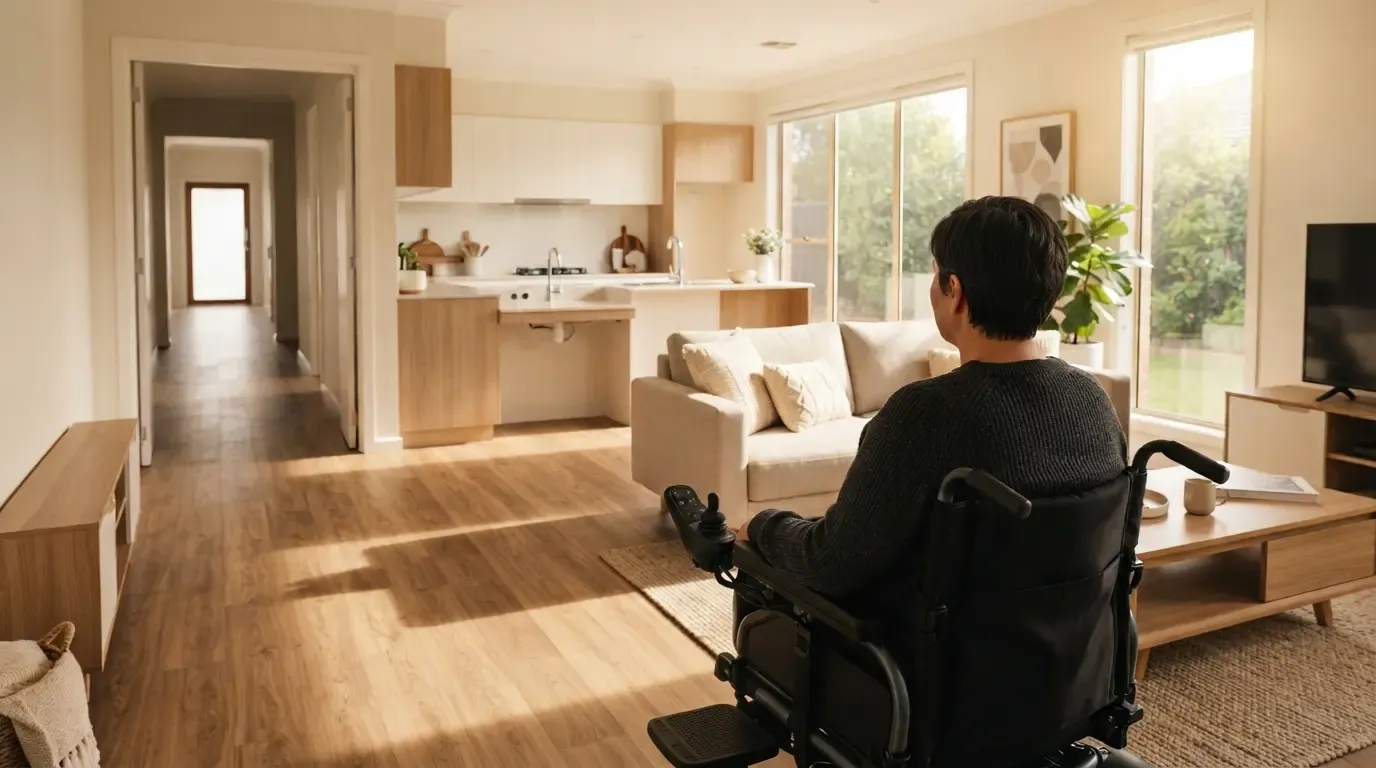
Finding suitable SDAs housing begins with understanding how capital funding works under the National Disability Insurance Scheme. Specialist Disability Accommodation provides purpose-built homes for participants with extreme functional impairment or very high support needs. Our team helps you navigate the evidence process so you can explore housing options that protect your safety and personal independence.
Key Takeaways
- Specialist Disability Accommodation funds the physical building, while personal care rosters fall under separate core supports.
- Participants qualify through legal benchmarks set out in Rule 12 or Rule 13 of the NDIS SDA Rules 2020.
- Certified homes match one of four design categories: Improved Liveability, Fully Accessible, High Physical Support, or Robust.
- Working with an independent coordinator protects your choice to change daily supports without losing your home.
How SDAs Housing Works Under the NDIS
Specialist Disability Accommodation provides homes with specialised architectural designs. The National Disability Insurance Agency funds these properties to reduce the need for high-cost physical interventions over time. This funding is not public housing or general rental relief.
Funding for SDAs covers only the physical bricks and mortar. Personal assistance like personal hygiene, meal preparation, and community access falls under Supported Independent Living or core funding.
Our team at Made To Help delivers registered support coordination services across Melbourne and regional Victoria. We help participants coordinate their housing goals while connecting them with independent housing providers and therapists.
Participants who live in these properties make a personal contribution toward daily rent. This fee is known as the Maximum Reasonable Rent Contribution. As outlined by Services Australia, this payment equals 25% of the basic Disability Support Pension rate, plus 100% of any Commonwealth Rent Assistance you receive.
You keep the rest of your pension payments for food, utilities, and daily living costs. This policy keeps specialised housing affordable for people on fixed incomes.
Meeting the Core Eligibility Criteria
Qualifying for SDAs funding requires meeting strict benchmarks under the NDIS (Specialist Disability Accommodation) Rules 2020. The agency evaluates whether standard housing fails to meet your functional requirements.
Pathway 1: Extreme Functional Impairment
Section 11 and Rule 12 focus on participants with severe functional barriers. You meet this standard if your disability causes major limitations in mobility, self-care, or communication.
You must show that ordinary domestic buildings prevent you from doing daily tasks independently. Specialised architectural features must be essential to help you move around, shower, or communicate safely.
Pathway 2: Very High Support Needs
Rule 13 assesses your daily personal support needs. This pathway applies if your family or informal carers cannot sustainably provide the intensive care you need.
This rule covers participants who require one-on-one help for most of the day. It also applies when complex behaviours create safety risks for you or your carers. The physical home must help reduce these risks.
Meeting the SDA Needs Requirement
Under Rule 14, your application must meet value-for-money standards. Assessors compare the cost of specialised housing against the cost of ongoing manual care. If automated doors or ceiling hoists lower the daily support hours you need, your application presents a strong case.
Clinical Evidence Needed to Prevent Rejections
The NDIA rejects many applications when they lack clinical detail. You must prove why ordinary homes and standard home modifications cannot meet your physical needs.
A registered Occupational Therapist must complete a Functional Capacity Assessment. This assessment measures your physical, sensory, and cognitive abilities during daily routines using standardised scoring tools.
Your therapist must also write a Housing Needs Report. This report explains the exact design features you need and shows why standard rental housing is inadequate.
To avoid delays or rejections, provide clear supporting evidence:
- Provide assessment scores that prove major dependencies in mobility or self-care.
- Supply clinical notes showing why simple modifications like grab rails cannot resolve your physical barriers.
- Include carer statements showing that family members cannot safely maintain physical care routines.
- Match building design recommendations directly with your personal functional goals.
The Four Architectural Design Categories
Every property enrolled with the NDIA must comply with the NDIS SDA Design Standard. These standards ensure that buildings deliver measurable accessibility improvements.
Improved Liveability
Improved Liveability homes support participants with sensory, intellectual, or cognitive impairments. These homes feature high visual contrast between walls, floors, and doorways to help you find your way around easily.
Fixtures use calming colour schemes and soft finishes to reduce sensory overload. Hallways and doorways are wider than standard residential builds, and bathrooms include step-in showers.
Fully Accessible
Fully Accessible dwellings support people who use manual wheelchairs or walking aids. Every primary room provides step-free paths of travel without trip hazards.
Kitchens feature lowered counters with open knee spaces so you can prepare food from a seated position. Bathrooms provide roll-in showers, grab rails, and wide turning areas.
High Physical Support
High Physical Support homes offer advanced engineering for people with significant physical limitations. Ceilings include structural reinforcement designed to support ceiling hoists in bedrooms and bathrooms.
Doors and hallways accommodate large power wheelchairs. The property includes smart home automation for doors, lights, and blinds.
These homes must include an Onsite Overnight Assistance room for active support staff. Clause 22 of the design standard requires backup power systems to run participant bedroom power points and automated doors for at least two hours during outages. Intercom systems allow direct communication with staff.
Robust Design
Robust properties focus on resident safety and physical durability. Walls, doors, and fittings use impact-resistant materials to withstand heavy force.
Windows feature laminated glass and secure locks to prevent accidental injury. Soundproofing dampens noise triggers, and yards include secure fences. Homes also include quiet retreat spaces to help with calm de-escalation.
Dwelling Types and Living Arrangements
Funding for SDAs covers different property types to suit your personal lifestyle preferences. Your funding plan outlines the dwelling type that best fits your needs:
- Apartments: Self-contained single or double units in larger residential buildings.
- Villas and Duplexes: Separate or semi-attached single-level residences on a single title.
- Detached Houses: Freestanding homes with private yards for up to three residents.
- Group Homes: Shared residences built for four or five participants.
Modern properties must adhere to strict density limits. Under Rule 31 of the SDA Rules 2020, new builds cannot house more than five long-term residents. The NDIA continues to phase out large institutional homes in favour of smaller domestic residences.
Many participants prefer to live alone in an apartment or villa. To get funding for single-resident housing, your assessments must show that living alone is safer and promotes greater independence than sharing.
You can also live with non-NDIS family members. Spouses, partners, and children can move into your home with you. Your funding covers your specialised housing expenses, while family members pay a standard rent share to the property manager.
Finding Vacancies and Protecting Your Rights
Finding available SDAs vacancies involves reviewing property platforms and working with your support network. You can check listings through provider websites or the official NDIS Housing Finder. Your Support Coordinator can arrange private viewings to check room layouts, bench heights, and assistive technologies before you apply.
In shared homes, housing providers must follow collaborative matching processes. You have the right to meet potential housemates and participate in tenancy decisions.
Your housing agreement must remain separate from your daily care roster. Under NDIS quality rules, a housing provider cannot force you to use their care staff. You can receive hands-on support through our assistance with self-care activities while leasing your home from an independent property provider. If you decide to change your daily support team, your housing tenancy remains safe.
Frequently Asked Questions About Specialist Disability Accommodation
How long does an SDA funding review take?
Review timeframes depend on NDIA processing schedules and how thorough your evidence is. Many participants find that the assessment process takes several months from the date all allied health reports are submitted.
Can I get funding for High Physical Support if my condition is progressive?
Yes, participants with progressive physical conditions can qualify for funding. Your Occupational Therapist should document your expected physical needs so the property can accommodate your future mobility requirements.
What happens if I want to change my care provider while living in an SDA home?
You can change your care team without moving out. Your tenancy agreement is a separate legal contract, which means your housing provider cannot evict you for choosing a different care provider.
Does SDA funding reduce my core supports?
No, it does not reduce your core supports. Housing funding sits under your Capital budget, leaving your Core supports intact to fund personal care, therapy, and community access.
Need Help Navigating NDIS Housing and Supports?
Our team helps you coordinate assessments, understand your funding options, and connect with suitable housing providers across Victoria.