Why Support Coordinators Must Complete Support Plans, Emergency Plans, and Risk Assessments
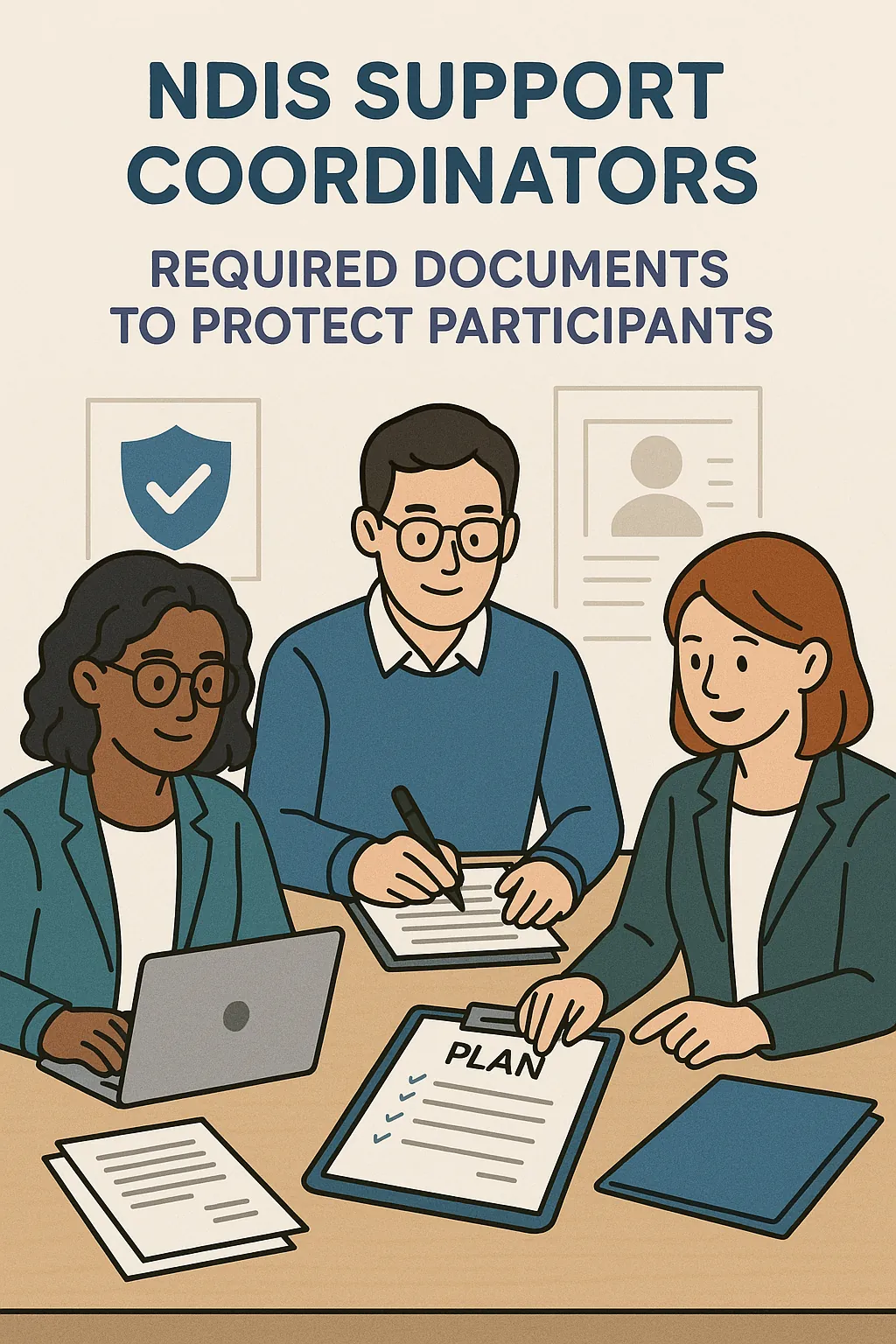
At Made To Help, we often hear questions from participants and families about why certain documents are required—particularly Support Plans, Emergency and Disaster Plans, and Risk Assessments. Some feel these belong more to providers of core or capacity-building supports. However, under the NDIS Practice Standards and the expectations of the NDIS Commission, Support Coordination providers have clear obligations to ensure these documents are in place.
This post explains why these plans matter, what regulations say, and how they protect participants.
1. Support Plans – Guiding the Use of Your NDIS Plan
A Support Plan is more than just paperwork. It is:
- A roadmap showing how a participant’s NDIS funding will be used.
- A way to clearly record participant goals, preferences, and choices.
- A compliance document: under the NDIS Support Coordination Module, coordinators must demonstrate how they help participants implement their NDIS plan.
Without a Support Plan, there is no evidence that the coordinator has fulfilled their duty to “support participants to exercise choice and control, and to make informed decisions”.
2. Emergency and Disaster Plans – Keeping Participants Safe
The NDIS Commission requires providers (including Support Coordination) to show how participants will remain safe in emergencies such as:
- Floods, bushfires, or power outages.
- Medical or health emergencies.
- Pandemic-related disruptions.
While core support providers may develop task-specific emergency responses, Support Coordinators must ensure there is an overarching Emergency and Disaster Plan on file. This demonstrates that the participant has been supported to prepare, that their vulnerabilities are identified, and that contingencies are in place.
Auditors check for this—if it’s missing, the provider risks non-compliance.
3. Risk Assessments – Protecting Participants and Workers
Every participant brings unique risks: home environment, medical conditions, behavioural factors, or vulnerability to exploitation.
Support Coordinators are responsible for:
- Completing a Participant Risk Assessment (linked to their goals and support environment).
- Completing a Home Risk Assessment (to keep workers safe when visiting participants at home).
- Updating these regularly or when circumstances change.
The NDIS Code of Conduct and Practice Standards both require providers to identify, record, and manage risks. Without a risk assessment, neither the participant nor the provider can be confident that supports are being delivered safely.
4. Why Pushback Happens – and Why We Can’t Skip It
We understand that some participants or families feel these documents are unnecessary or “extra work.” In reality:
- They protect participants: ensuring they receive safe, effective, and coordinated supports.
- They protect workers and providers: giving clear guidance and reducing liability.
- They protect funding: without them, providers cannot demonstrate compliance, and the NDIA may question whether supports are being delivered responsibly.
Put simply: no Support Plan, no Risk Assessment, no Emergency Plan = audit failure.
NDIA has recently become stricter with their auditors requiring them to enforce these rules so even though you have seen other support coordinators not ask for these, they have been non compliant but they may not get away with this for long and in the meantime there is no excuse, this puts your budgets at risk.
5. Our Commitment at Made To Help
We are committed to going beyond minimum compliance. By keeping participant files complete—with up-to-date Support Plans, Risk Assessments, and Emergency Plans—we:
- Meet NDIS Commission audit standards.
- Provide participants with safer, higher-quality services.
- Build trust and transparency with families and communities.
✅ In summary: Support Coordinators must complete these documents—not as red tape, but as essential protections. They are part of our duty to help participants live more independently, more safely, and with more control.
Support Coordinators have a regulatory and ethical duty to complete (or ensure completion of):
- Support Plans, developed collaboratively and regularly reviewed (Core Module)
- Risk Assessments (participant-focused and home-based), with documented mitigation strategies (Core Module)
- Emergency & Disaster Planning, embedded into service agreements and participant documentation (Core + Specialist Module)
These are not optional extras—they are integral components of accountable, safe, and high-quality Support Coordination consistent with NDIS expectations.
Further reading on why these plans are required can be found here